

Graph Academy has always been home to structured learning, with courses, certifications and guided paths. Today we're opening a new door. We want Graph Academy to be where the broader graph community brings its real-world experience: the integrations you've built, the patterns you've battle-tested, the war stories you've shared at a conference, and more!
We're inviting technology partners, systems integrators and community members to contribute alongside Neo4j staff. If you're building with Neo4j or building something that connects to it, there's an audience here that wants to learn from you.
What You Can Contribute
Whether you have a detailed tutorial, a focused how-to, a case study from a customer implementation, an entire course or a screencast walking through a complex pattern, Graph Academy is the right home for it. Content lives alongside Graph Academy courses, meaning your work reaches 300,000+ developers globally at exactly the moment they're ready to go deeper.
We're looking for:
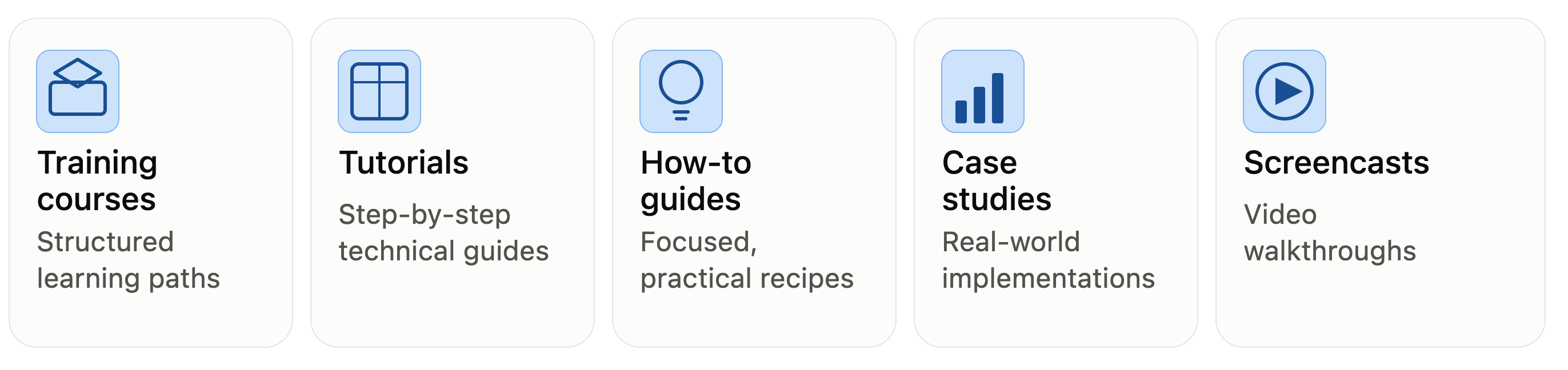
- Training courses — structured, multi-lesson learning paths
- Tutorials — step-by-step technical guides
- How-to guides — focused, practical recipes
- Case studies — real-world implementations
- Screencasts — video walkthroughs of complex patterns
Your Profile, Your Audience
Your content appears on Graph Academy with your name, your contributor profile and links to your work and organization. You get attribution, discoverability and a credible platform and your audience gets a trusted place to find your expertise. Partners who have built integrations with Neo4j can use Graph Academy to document and showcase those integrations to the tens of thousands of developers who study on Graph Academy every month.
How It Works
The process is straightforward. Submit your content idea via a Google form and our editorial team will review it, work with you to get it into great shape, and then publish it on Graph Academy with your profile attached. We keep the bar high so that everything on Graph Academy is worth bookmarking.
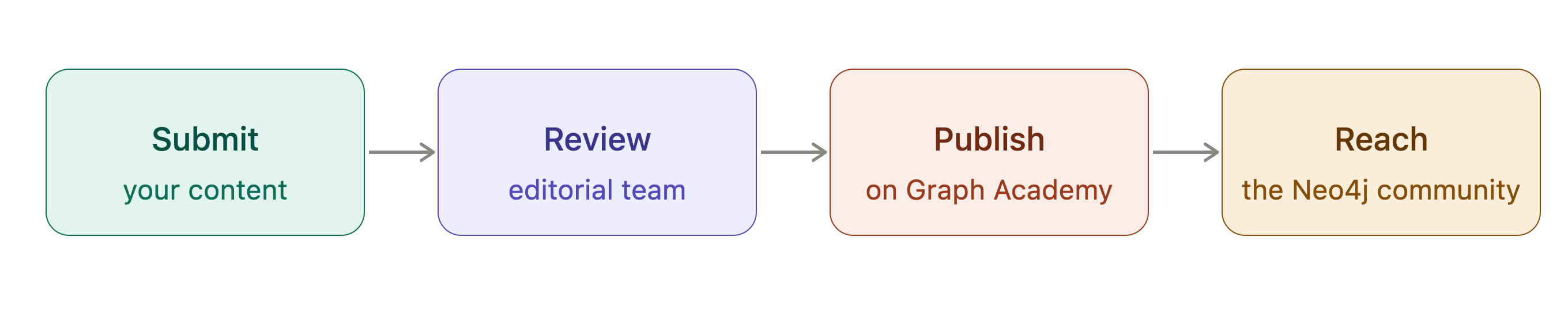
- Submit your content idea
- Review with our editorial team
- Publish on Graph Academy
- Reach the Neo4j community
Who We're Looking For
We're particularly interested in hearing from community members, technology and SI partners who have built integrations with Neo4j, graph-specialized consultancies and independent technical evangelists with hands-on production experience. If you're not sure whether your content is the right fit, reach out as we'd rather have the conversation than miss a great contribution!
Get Started
Read the submission guidelines below and then submit a content idea.
We're excited to build this with the community. The best graph content isn't written by any one team, but it comes from the people doing the work.
Submission Guidelines
Graph Academy welcomes contributions from the wider technology community. These guidelines will help you understand what we're looking for and how to give your submission the best chance of being published.
What Makes A Good Submission
We publish content that is practical, accurate and grounded in real experience. A strong submission:
- Solves a genuine problem or answers a question developers actually ask
- Is based on hands-on work, not a summary of documentation
- Includes working code, commands or configuration where relevant
- Is written clearly enough that a developer unfamiliar with your stack can follow along
What We Don't Publish
- Promotional content, product announcements or press releases
- Content that duplicates what's already covered on Graph Academy
- Content written primarily for a non-developer audience
- Articles that link off to the full content hosted elsewhere
Content Types And What We Expect
- Training courses are collections of lessons on a topic and many courses form a path. Reach out before building one as we'll co-plan the structure with you.
- Tutorials take the reader from zero to a working outcome. They have a clear start and end state and walk through every meaningful step.
- How-to guides solve one specific task. They assume the reader has context and get straight to the point with a single focused problem and working solution.
- Case studies describe a real implementation: the problem, the approach, the outcome and what you'd do differently.
- Screencasts are recorded walkthroughs of a pattern or workflow. Good audio quality is a requirement.
Style And Quality Bar
- Write in plain, direct English - conversational is fine, marketing language is not
- Use code blocks for all commands, queries and configuration snippets
- Test everything as broken code will be sent back before review
- Screenshots and diagrams should be legible at screen resolution
Syndication
Graph Academy publishes your content as the original source. You're welcome to syndicate it to other platforms afterwards. We ask that you wait at least one week and include a canonical link pointing back to the Graph Academy version. This ensures you get proper credit and that search engines recognize the original.
What Happens After You Submit
Our editorial team reviews every submission. We'll come back to you within three working days with one of three outcomes: accepted, accepted with changes, or not a fit (with a brief note explaining why). If changes are needed, we'll work with you through one or two rounds of edits before publishing.
Your name, company name, contributor profile and links to your work appear on the published page.
Before You Submit
Check the existing Graph Academy content to ensure your topic isn't already well covered. If you're unsure whether your idea is a fit, reach out before writing as we'd rather have the conversation early.
Use the form to submit a content idea.


Comments (0)
Loading comments...